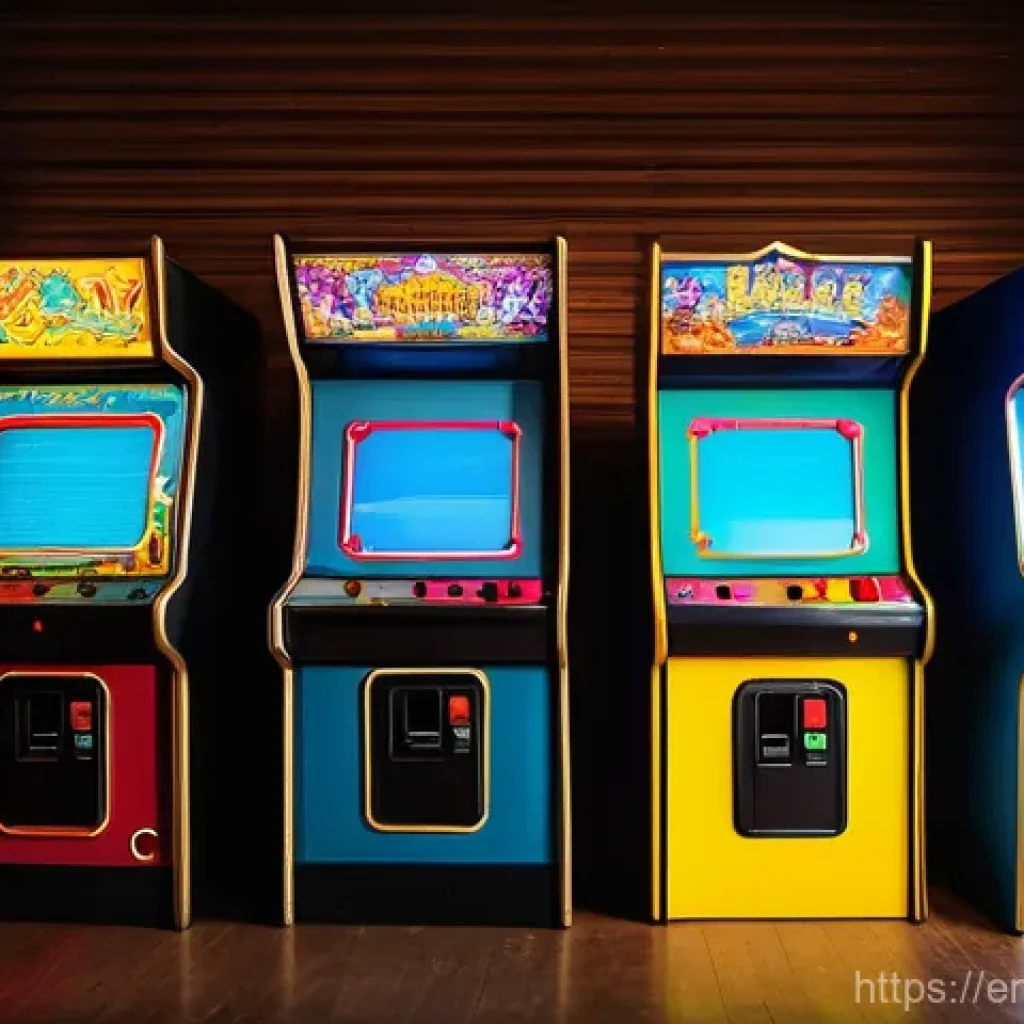
Oh man, there’s just something about the glow of an old arcade cabinet, right? That distinctive hum, the clack of joysticks, the satisfying thump of a button press – it instantly teleports me back to my childhood, pockets full of quarters, ready to conquer the high score.
Even today, with graphics that are practically real life, there’s a unique magic to those classic machines that digital downloads just can’t quite replicate.
I’ve always been fascinated by what goes on inside those behemoths, what makes them tick and deliver endless hours of pixelated joy. It’s not just a screen and some buttons; it’s a meticulously engineered piece of gaming history, a perfect blend of hardware and simple-yet-effective design that captivated generations.
With the retro gaming scene booming again and modern arcade bars popping up, it feels like the perfect time to peek behind the curtain and truly understand the ingenious architecture of these beloved machines.
Trust me, once you see how they’re put together, you’ll appreciate that next high score even more. Let’s delve deep into the captivating world of arcade game machine architecture and uncover its secrets!
The Iconic Shell: More Than Just a Box
Oh man, walking into an arcade, the first thing that always grabbed me wasn’t the flashing lights or the sound, but the sheer presence of those cabinets.
They’re like monoliths, each one a unique monument to a digital world within. It’s not just plywood and plastic; it’s a carefully engineered fortress designed to immerse you completely.
I remember staring up at the towering cabinets of games like *Galaga* or *Pac-Man*, their vibrant side art practically pulling me in. These aren’t just protective casings; they’re the first handshake, the initial promise of adventure.
The size, the angle of the monitor, even the height of the control panel – it’s all meticulously thought out to create an ergonomic, albeit bulky, gaming experience that really makes you feel like you’re part of the action.
Plus, let’s be real, the cabinet itself had to be a tank. It needed to withstand endless button mashing, enthusiastic joystick wiggling, and the occasional frustrated thump from a player who just lost their last life.
That robustness wasn’t an accident; it was a fundamental design principle.
The Allure of the Artwork
Seriously, the cabinet artwork was half the experience, wasn’t it? Before you even dropped a quarter, those incredible hand-painted or silk-screened graphics on the side panels and marquee had to hook you.
Think about the iconic ghost designs on *Pac-Man* or the cosmic battles depicted on *Asteroids*. These weren’t just pretty pictures; they were storytelling devices, setting the stage and building hype for the game inside.
I often found myself just admiring the intricate details, trying to imagine the worlds these artists conjured up. For me, the artwork was a key part of the magic, a visual siren call that whispered, “Your adventure starts here.” It added so much character and a unique identity to each machine, making them stand out in a crowded arcade.
It truly was an art form in itself, and I genuinely believe it contributed hugely to the overall mystique and enduring appeal of these games.
Built to Last: The Cabinet’s Resilience
And let’s not forget how these things were built like absolute tanks. I mean, they had to be, right? Imagine the constant flow of players, the competitive energy, the occasional accidental bump or even a frustrated pound on the cabinet edge.
These machines were designed for durability, constructed from sturdy plywood or particle board, often reinforced with metal brackets. The T-molding around the edges wasn’t just decorative; it protected the cabinet from dings and chips.
I’ve seen some machines from the early ’80s that are still kicking today, a testament to their incredible build quality. It’s a far cry from today’s consumer electronics that feel like they’ll fall apart if you look at them wrong!
This robust construction was essential for operators too, minimizing repair costs and downtime. They were truly investments, built to last for years of continuous play.
The Brains of the Operation: Where the Pixels Are Born
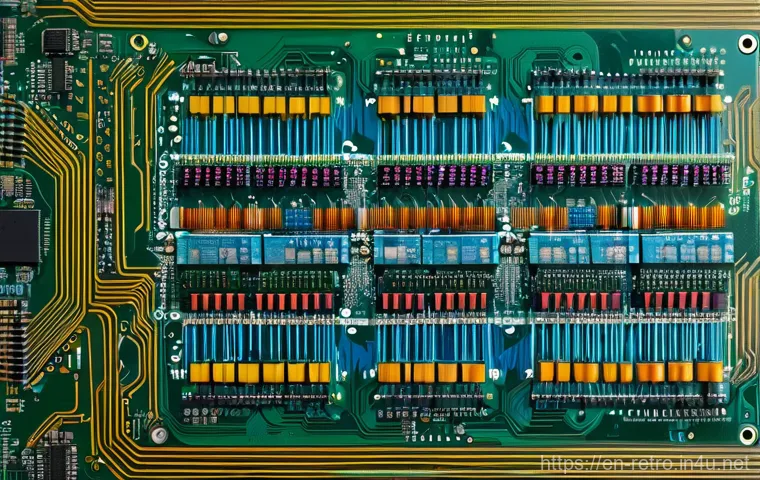
Underneath all that fantastic artwork and robust cabinetry, there’s a dazzling array of circuit boards, chips, and wires – the true brain of the arcade machine.
This is where the magic truly happens, where simple electrical signals transform into vibrant sprites, challenging enemies, and addictive gameplay. When I first started tinkering with old arcade boards, I was amazed by the complexity packed into what looked like a relatively simple piece of hardware.
It’s not just one big circuit board; it’s often a stack of them, all working in concert, communicating at lightning speed to render the game world in real-time.
This primary circuit board, often called the PCB (Printed Circuit Board) or “game board,” is the undisputed nerve center. It houses the CPU, the ROM chips containing the game’s code and assets, and various other integrated circuits that handle graphics, sound, and input/output.
Every single pixel, every sound effect, every collision detection – it all originates here.
The Heartbeat: Central Processing Unit
At the core of that game board is the Central Processing Unit, or CPU, the actual “brain” that executes the game’s instructions. While today’s CPUs are multi-core behemoths running at gigahertz speeds, the CPUs in classic arcade machines, like the Z80 or the Motorola 68000, were far simpler but incredibly efficient for their time.
I remember reading about how clever programmers had to be to squeeze so much performance out of these limited processors. They had to be masters of assembly language, optimizing every single clock cycle.
It’s truly fascinating to think that the same kind of basic computational principles are at play, just on a much grander scale today. These CPUs were the workhorses, constantly calculating enemy movements, player input, and game physics, all to deliver that smooth, responsive gameplay we loved.
Memory Lane: ROMs and Game Storage
And then there are the ROMs – Read-Only Memory chips. These are essentially the game’s permanent storage, where the game program, graphics, sound effects, and level data are etched in stone, or rather, silicon.
Once burned onto these chips, the game code is there for good, which is why when you turn on an original *Donkey Kong* cabinet, it always boots up *Donkey Kong*.
There’s no loading screen from a hard drive; it’s instant access. I’ve always found it amazing how much effort went into optimizing these games to fit within the incredibly tight memory constraints of the era.
Developers had to be incredibly resourceful, often reusing sprites or employing clever compression techniques to fit an entire, engaging game experience into just a few kilobytes or megabytes of ROM.
It’s a testament to their ingenuity!
Your Hands-On Connection: The Control Panel Chronicles
If the cabinet is the body and the PCB is the brain, then the control panel is definitely the central nervous system – your direct link to the game’s world.
This is where you, the player, physically interact with the machine, translating your intentions into digital action. For me, the feel of a solid joystick and the satisfying click of a well-worn button are absolutely integral to the arcade experience.
There’s a certain tactile feedback you just don’t get with modern controllers. Each control panel was often uniquely designed for the specific game it housed, whether it was the single-joystick-and-one-button simplicity of *Pac-Man* or the elaborate multi-button setup of a fighting game.
The layout, the response, the sheer physical sensation – it all contributed to the immersion and replayability.
The Feel of the Fight: Joysticks and Buttons
Oh man, the joysticks and buttons! Each type had its own personality. You had the sturdy 8-way joysticks for fighting games, the more delicate 4-way sticks for maze games, and even specialized rotary joysticks for games like *Ikari Warriors*.
I vividly remember the distinct resistance of different joysticks and the unique “thwack” of a well-pressed button. There’s just something about the physical commitment of pressing a large, colorful button that makes it feel more impactful than a tiny gamepad button.
And the wear and tear these controls endured! A good joystick or button could last for tens of thousands of presses, a testament to their robust electromechanical design.
They weren’t just input devices; they were extensions of your will, your connection to the pixelated gladiators on screen.
Beyond the Basics: Specialized Controls
While joysticks and buttons were ubiquitous, arcade machines truly shone with their innovative, specialized controls. Think about the trackball for *Centipede* and *Missile Command*, offering a fluid, precise aiming experience.
Or the spinner for *Arkanoid*, allowing for incredibly fine control over your paddle. My personal favorite might be the light gun for games like *Duck Hunt* or *Time Crisis*, which felt so incredibly futuristic at the time.
These unique interfaces weren’t just gimmicks; they were integral to the gameplay, offering experiences that couldn’t be replicated at home (at least not easily).
They truly showed off the creativity of arcade designers and pushed the boundaries of interactive entertainment, pulling you deeper into the game’s fantasy.
Bringing Worlds to Life: The Visual and Auditory Experience
What’s an arcade game without its dazzling visuals and immersive sounds? These elements are absolutely crucial for drawing you into the game world, creating that sense of urgency, excitement, and accomplishment.
I remember being mesmerized by the vibrant colors and sharp lines of vector graphics in *Asteroids*, or the incredibly catchy tunes of *Bubble Bobble*.
The display and audio components are just as vital as the game board itself, translating the digital information into something we can see and hear, making the experience truly come alive.
Without them, it would just be a silent, dark box.
The Glowing Canvas: Monitors and Displays
Back in the day, the monitor was paramount. We’re talking CRT (Cathode Ray Tube) screens, not the flat, crisp LCDs we’re used to now. These monitors had a distinctive glow and a slight curve that, for some reason, just felt right for pixel art.
The refresh rates were incredible for the time, ensuring smooth action without noticeable lag. There were two main types: raster displays, which are like traditional TVs, displaying games like *Pac-Man* or *Street Fighter*, and vector displays, which used electron beams to draw lines, creating those unique, wireframe graphics of games like *Asteroids* or *Tempest*.
I have a special fondness for vector games; there was just something so elegant and precise about their graphics. Maintaining these old CRTs now is a labor of love, but the vibrant, immediate visual feedback they provide is undeniably part of the classic arcade charm.
The Soundtrack of Our Youth: Sound Systems
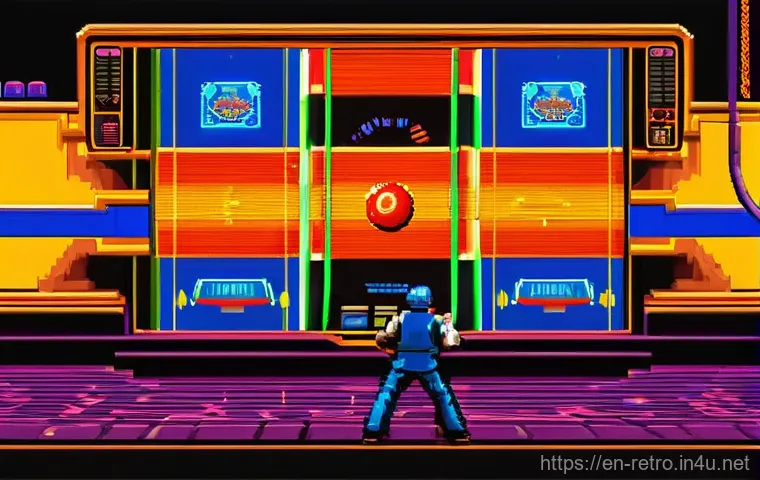
And the sound! Oh my goodness, the sound was critical. It wasn’t just background noise; it was an integral part of the game.
The catchy melodies of *Mario Bros.*, the frantic beeps of *Space Invaders*, the satisfying “hadouken!” of *Street Fighter* – these sounds are etched into my memory.
Arcade machines often had robust audio systems, sometimes even stereo speakers, to create an immersive auditory experience that echoed through the arcade.
The sound effects provided immediate feedback for actions, collisions, and achievements, enhancing the thrill of every moment. And let’s be honest, half the fun was hearing the distinctive attract mode music from across the room, beckoning you closer to try your luck.
It’s hard to imagine these games without their iconic soundscapes.
Powering the Past: Keeping the Quarters Flowing
Underneath all the fun and games, there’s a serious amount of electrical engineering keeping everything running smoothly. The power supply in an arcade machine is the unsung hero, quietly converting the wall current into the various stable voltages needed by all the sensitive electronic components.
Without a reliable power supply, your game simply wouldn’t boot up, or worse, it could be prone to unpredictable glitches and crashes. I’ve spent my fair share of time troubleshooting power supply issues on old machines, and let me tell you, it’s a critical component.
It’s not the glamorous part of arcade architecture, but it’s absolutely essential for those endless hours of pixelated joy.
The Electrical Lifeline: Power Supply Unit
The Power Supply Unit (PSU) in an arcade machine is usually a robust beast, designed to deliver stable and consistent power to all the various components: the game board, the monitor, the control panel LEDs, and even the coin mechanism.
These PSUs typically convert AC mains voltage into several DC voltages, commonly +5V for the logic boards and sometimes +12V for specific components like amplifiers or certain types of controls.
I learned pretty quickly that a failing PSU can cause all sorts of bizarre issues, from screen flickering to sound distortion, and sometimes even prevent the game from starting up entirely.
It’s a testament to their original design that many of these units are still functioning after decades of continuous use, though modern replacements are often a wise upgrade for reliability.
The Quarter-Muncher: Coin Mechanisms
Let’s be honest, the entire arcade business model revolved around the coin mechanism, didn’t it? This deceptively simple device was the gatekeeper to the fun, patiently waiting for that satisfying clunk of a quarter (or token!) before granting access to another round.
These mechanisms were incredibly precise, designed to detect legitimate currency while rejecting slugs or foreign objects. I always found it fascinating how they worked, using a combination of size, weight, and magnetic properties to verify the coin.
A malfunctioning coin mech could be an operator’s worst nightmare, costing them revenue. It truly was the silent workhorse that kept the economic engine of the arcade running, directly linking your pocket money to your next high score attempt.
The Unseen Architects: Beyond the Main Components
While we often focus on the flashy parts – the screen, the controls, the game itself – there are so many other crucial, often overlooked components that knit the entire arcade machine together.
These are the unsung heroes that ensure everything communicates properly, stays cool, and holds together through countless hours of play. From the wiring harnesses that carry signals to the intricate cabinet locks, every piece plays a vital role in the overall integrity and functionality of these beloved machines.
It’s a holistic system, where the failure of even a small part can bring the whole experience to a grinding halt.
| Component | Primary Function | Why It Matters (from my experience) |
|---|---|---|
| Wiring Harnesses | Connects all electrical components; transmits power and signals. | Messy or faulty wiring leads to frustrating intermittent issues. I’ve spent hours tracing wires! |
| Speakers & Amplifier | Produces game audio and sound effects. | A good speaker system makes a huge difference in immersion; flat sound kills the vibe. |
| Marquee Light | Illuminates the game title/artwork at the top of the cabinet. | Essential for attracting players from across the room; a dark marquee is a sad marquee. |
| Coin Door & Lock | Secures the coin box and provides access to internal components. | Crucial for security and preventing tampering; it’s the vault for the operator’s earnings. |
| Cooling Fans | Prevents overheating of sensitive electronic components. | Overheating is a silent killer for PCBs and power supplies; active cooling extends machine life. |
The Backbone: Wiring and Connectivity
Just imagine the spaghetti of wires inside an arcade cabinet! It’s incredible. The wiring harnesses are the circulatory system, carrying power to every component and transmitting vital signals between the game board, controls, and display.
Each wire has a specific purpose, and understanding the color coding and pinouts is an art form in itself for restorers. A loose connection or a frayed wire can cause all sorts of headaches – ghost inputs, flickering screens, or a complete system failure.
I’ve learned the hard way that spending extra time on proper wiring management upfront saves a ton of troubleshooting down the line. It’s not glamorous, but without meticulously organized and robust wiring, the entire machine would be a non-starter.
Maintaining the Chill: Cooling Systems
You wouldn’t think about it much when you’re caught up in a game of *Street Fighter*, but internal temperature management is surprisingly important for arcade machines.
All those electronic components generate heat, and too much heat is the enemy of electronics. Early machines might have relied on passive ventilation, but many later and more complex cabinets incorporated cooling fans.
These fans circulate air, preventing the PCBs, power supplies, and even the monitor from overheating. I’ve seen firsthand how a failing fan can lead to intermittent crashes or even permanent damage to sensitive chips.
Ensuring proper airflow and having a functional cooling system is absolutely critical for the longevity and reliability of these classic machines. It’s one of those “out of sight, out of mind” components until it fails, and then suddenly, it’s the most important thing!
Wrapping Up Our Arcade Odyssey
Whew, we’ve really taken a deep dive into the heart of what makes classic arcade machines tick, haven’t we? It’s more than just a trip down memory lane; it’s an appreciation for the ingenious engineering, the vibrant artistry, and the sheer passion that went into creating these digital wonders. For me, every time I hear that distinct “clunk” of a quarter dropping or feel the satisfying snap of a microswitch, it’s a powerful reminder of simpler times and the pure joy of gaming. These machines aren’t just relics; they’re enduring monuments to a golden age, preserved by a community of enthusiasts who recognize their irreplaceable charm and importance. They stand as a testament to how creative minds, even with limited technology, crafted experiences that continue to captivate and inspire. It’s a labor of love for many of us, keeping these beauties alive, and it’s a journey I wouldn’t trade for anything.
Extra Life: Useful Info for Arcade Enthusiasts
1. Regular Maintenance is Key: Just like any beloved classic, arcade machines thrive on consistent care. Cleaning the exterior, dusting inside, checking for loose wires, and lubricating joysticks and buttons can prevent many common issues and significantly extend the life of your machine. Regular maintenance isn’t just about fixing problems; it’s about proactively preserving that nostalgic gaming experience.
2. Surge Protectors are Your Friend: Power fluctuations can be a silent killer for sensitive electronic components within an arcade machine. Investing in a quality surge protector is a small step that can save you from potential damage and costly repairs, safeguarding the heart of your retro gaming setup.
3. The Value Varies Wildly: If you’re looking to buy a vintage arcade machine, be prepared for a range of prices. Common titles in decent condition might go for anywhere from $500 to $2,000, while rarer games or those in pristine, original condition can easily fetch $5,000 to $15,000 or more. Location, condition (working vs. non-working), and game popularity all play a huge role. Auctions or local marketplaces can sometimes yield better deals than online retailers.
4. Restoration is a Rewarding Challenge: Bringing a non-functional or worn-out machine back to life is an incredibly fulfilling endeavor. It often involves assessing the cabinet, disassembling components, repairing electrical issues (like replacing capacitors or fixing power supplies), restoring artwork, and reassembling everything. There’s a fantastic community out there, full of resources and fellow enthusiasts, eager to help you on your restoration journey.
5. Community is Everything: Whether you’re troubleshooting a stubborn monitor, hunting for a rare part, or just want to share your latest high score, the retro arcade community is a treasure trove of knowledge and camaraderie. Online forums, social media groups, and local meetups are fantastic places to connect with others who share your passion for these incredible machines. Many collectors also open their archives to the public, sharing their passion and experience with the next generation.
Your High Score: Key Takeaways
Diving into the intricate world of arcade machine components reveals that each part, from the robust cabinet and captivating artwork to the intricate PCBs and tactile controls, is a crucial piece of a larger, immersive puzzle. We’ve seen how the internal “brains”—the CPU and ROMs—bring pixels to life, and how the display and audio systems transform digital signals into unforgettable sensory experiences. Even the often-overlooked elements like power supplies, cooling fans, and meticulous wiring are absolutely vital for keeping these cherished machines humming. Ultimately, these aren’t just collections of circuits and wood; they’re carefully crafted experiences, built with passion and engineering brilliance, designed to transport us to other worlds, one quarter at a time. The enduring appeal of arcade games lies not just in their playability, but in the holistic design that makes every interaction feel deliberate, engaging, and deeply nostalgic. It’s a true blend of art, science, and good old-fashioned fun.
Frequently Asked Questions (FAQ) 📖
Q: Why do these vintage arcade cabinets still capture our hearts when modern games look so incredibly realistic?
A: Oh man, that’s such a great question, and honestly, it’s something I’ve pondered a lot myself! I think part of it is pure, unadulterated nostalgia. For folks like me who grew up pumping quarters into these beasts, there’s an immediate flood of childhood memories that just hits different.
But beyond that, it’s the sheer tactility of it all. You’re not just pressing buttons on a controller; you’re gripping a solid joystick, slamming down a chunky button, and feeling the whole cabinet vibrate with the action.
It’s a truly physical experience that digital downloads, no matter how beautiful, can’t quite replicate. Plus, the gameplay itself often comes down to pure, unadorned skill – no complex tutorials, just simple-to-learn, hard-to-master fun that keeps you coming back for “just one more game.” And let’s not forget the social aspect!
I remember huddling around a cabinet with friends, cheering each other on, or even waiting impatiently for my turn. It was a community experience, and honestly, that’s a magic that’s hard to beat even today.
Q: So, what exactly is inside these classic arcade machines that makes them work? It always seemed like pure magic to me!
A: You’re not alone, friend! For years, I just assumed it was some kind of wizardry, but after finally getting my hands dirty and peeking inside a few, the architecture, while ingenious, is surprisingly straightforward once you break it down.
At its heart, you’ve got a few key players. First off, there’s the monitor, usually a chunky CRT (Cathode Ray Tube) display that gave those vibrant, pixelated graphics their distinctive look.
Then there’s the PCB (Printed Circuit Board), which is essentially the “brain” of the operation, holding all the game’s programming, processors, and memory.
This is where the magic really happens! You also have a robust power supply to keep everything juiced, and of course, the controls – the joysticks and buttons, meticulously wired up to send your commands to the PCB.
All of this is housed within the sturdy cabinet, which isn’t just for looks; it’s designed for durability and to protect those precious internal components from countless enthusiastic players (and maybe a few frustrated slams!).
It’s a beautifully simple, yet incredibly effective, system when you think about it.
Q: How did these arcade game machines influence the way we play video games today? Did they really leave a lasting mark?
A: Oh, absolutely! Their influence is huge – way more than most people realize. Think about it: early arcade games were often the first exposure many had to video games, setting the stage for an entire industry.
They pioneered so many fundamental game mechanics and control schemes that are still in use today. Seriously, without the simple, intuitive joystick and button setups perfected in arcades, console controllers might look totally different.
Beyond controls, the idea of a “high score” and competitive play was practically born in the arcade, driving players to master games and creating that addictive loop of trying to beat your friends.
Even the early graphics limitations pushed designers to be incredibly creative with pixel art, influencing stylistic choices that you can still see in indie games today.
And don’t forget the whole concept of “quarters” and quick, intense gameplay sessions – that evolved into the bite-sized, highly engaging mobile games we play now.
So yes, from pushing technological boundaries to shaping game design philosophies, arcade machines didn’t just entertain; they laid the very foundation for the entire gaming universe we inhabit!